
 Ilan Asseo
AI for Sales Prospecting: Tactics That Book Meetings
Buyers prefer timely, contextual outreach. This playbook shows practical AI-driven LinkedIn tactics that help SDRs book more qualified meetings.

Buyers do not reward volume. They reward timely context, a useful conversation, and an easy next step. That is why the most effective AI for sales prospecting is not just a message generator. It is a system that detects buying signals, opens respectful conversations, qualifies in the thread, and makes booking a meeting the obvious outcome.
Below is a practical, testable playbook you can run on LinkedIn to create more qualified conversations and more meetings, without burning your market. It draws on what we have seen work across thousands of conversations and complements deeper guides like our LinkedIn Prospecting Playbook and Automated LinkedIn Outreach: Do It Safely and Effectively.
Industry evidence: “As customers increasingly learn and buy digitally, sales reps become just one of many possible sales channels.” — Cristina Gomez, Managing Vice President, Gartner.
Source: Gartner
What changes when AI runs prospecting
AI prospecting that actually books meetings is built on six principles:
- Fit before volume, every day. Tight ICP and trigger-driven targeting beat big lists.
- Personalization with purpose. Reference context that explains why the outreach is timely.
- Two-way conversation, not a blast. Ask one clear question that earns a reply.
- In-thread qualification. Confirm problem, impact, and timing inside the DM, not after handoff.
- Frictionless scheduling. Offer the next step that matches the buyer’s energy.
- Continuous testing. One variable at a time, measured against the conversion ladder.
If you want examples of message anatomy and cadences, see LinkedIn Outreach That Converts. Below we focus on the AI tactics that move prospects from first touch to booked time on your calendar.
AI for sales prospecting: tactics that book meetings
1) Trigger-first micro-campaigns
Why it works: Relevance plus timing beats clever copy. Micro-campaigns let you reference a fresh change that buyers already care about.
How to run it with AI:
- Choose one trigger and one persona: new role, hiring spurt, product launch, recent funding, tech stack addition, event attendance.
- Feed that trigger and a short value hypothesis into your AI prompt or template.
- Keep the opener under 300 characters and ask a single question.
Example opener: “Congrats on the new RevOps lead role. Many teams rebuild their outbound playbook in the first 90 days. Should I send a 60 second rundown of how peers use LinkedIn conversations to surface quick wins?”
Primary KPI to watch: Reply rate and positive intent rate.
Internal resource: Our Business Development Rep AI tactics shows prompt structures that turn triggers into tight openers.
2) Value-drop follow ups that do not over-explain
Why it works: Buyers do not want a pitch deck in a DM. A small, specific insight earns attention and replies.
How to run it with AI:
- After a connection accept or neutral reply, send a single value drop tied to the trigger.
- Offer a useful artifact, not a brochure: a checklist, snippet, or one metric peers improved.
Example follow up: “Noticed your team is hiring 3 SDRs. Quick checklist we share with new teams: the 5 signals that predict who will book on LinkedIn. Want it here?”
Primary KPI: Reply rate on follow up, movement to positive intent.
3) Thread-safe qualification in four messages
Why it works: You reduce no-shows when you qualify lightly before offering time.
How to run it with AI:
- Use a conversational flow that confirms fit without interrogation: context, pain, impact, timing.
- Map answers to your qualification model (BANT, MEDDICC, SPICED) behind the scenes.
Example micro-flow:
- “Out of curiosity, are you focused more on ramping new SDRs or improving reply rates with the current team?”
- “If you could move one metric this quarter, which matters most: qualified conversations or meetings booked?”
- “Is this something you are testing now or planning for next quarter?”
Primary KPI: Qualified conversation rate and meeting acceptance once offered.
See our step by step in AI Sales Automation: From Prospecting to Qualification.
4) Objection turns, not rebuttals
Why it works: Most objections are timing or workload, not a referendum on value. A smaller ask keeps momentum.
How to run it with AI:
- If they say “Send info,” narrow the info to a single decision they already face and ask permission.
- If they say “No time,” offer an async preview or two crisp time options.
Examples:
- “Happy to, and to keep it useful, do you want the 3 line summary teams use to evaluate LinkedIn vs email for first touch?”
- “Understood, would a 90 second screen recording tailored to your hiring plan help you decide if this is worth a chat?”
Primary KPI: Positive intent after objection and conversion to scheduled.
5) Frictionless scheduling that respects preference
Why it works: Buyers are more likely to accept a next step when you make scheduling easy and low risk.
How to run it with AI:
- Offer one soft CTA first: “Worth a quick compare?”
- When they agree, propose two specific time windows and include a fallback link.
- If they prefer email or an assistant, ask for the best contact to loop in.
Example: “Great, would Tuesday 10–12 PT or Wednesday 2–4 PT work? If easier, I can send a quick note to your EA or share a scheduling link.”
Primary KPI: Meeting booked rate and show rate.
6) Account multithreading with role-appropriate value
Why it works: Multi-threading increases the odds a motivated mobilizer sees a useful message.
How to run it with AI:
- Draft two variations per account: one for a hands-on practitioner, one for a sponsor.
- Reference the same trigger from different angles and keep both messages independent, not name dropping.
Examples:
- Practitioner: “Curious if the team is testing AI to qualify in-thread so reps can focus on later-stage calls.”
- Sponsor: “Leaders tell us the biggest lift comes from turning more replies into qualified meetings without adding headcount. Want the one page?”
Primary KPI: Account level positive intent and meetings per account.
7) Event-timed blitz that feels human
Why it works: Conferences, webinars, and product launches create natural reasons to talk.
How to run it with AI:
- Before the event: connection with a short, specific question.
- During: share one takeaway your prospect will care about.
- After: three line recap with a single next step.
Example sequence:
- Pre: “Are you at SaaStr next week? I am comparing AI meeting-booking tactics across 3 playbooks. Want to swap notes after?”
- Post: “Fast takeaway from the panel on AI prospecting: teams win with trigger-first messages. Happy to share the checklist I use if helpful.”
Primary KPI: Reply rate within 48 hours and meetings within 7 days of the event.
Quick reference: which tactic moves which metric
| Tactic | Where it works best | Core move | Primary KPI |
|---|---|---|---|
| Trigger-first micro-campaigns | Net new outbound | Tie message to timely change | Reply rate, positive intent |
| Value-drop follow ups | Post-acceptance nurturing | Share one helpful artifact | Reply rate |
| Thread-safe qualification | Pre-meeting DM flow | Confirm problem, impact, timing | Qualified conversation rate |
| Objection turns | Mid-thread stalls | Offer a smaller, specific next step | Positive intent to scheduled |
| Frictionless scheduling | After interest is confirmed | Propose times plus a fallback | Booked meetings, show rate |
| Multithreading | ABM accounts | Persona-specific value | Meetings per account |
| Event-timed blitz | Field and virtual events | Before, during, after touchpoints | Meetings within 7 days |
How to operationalize this with AI, without spamming
A solid system ties targeting, prompts, scoring, testing, and human oversight together. Here is a simple pattern to follow, and how Kakiyo supports it:
- Targeting and templates: Load a narrow ICP with one trigger. Use industry-specific templates to keep tone and claims consistent.
- Prompts and A/B testing: Create two short prompt variants that change only one element, such as the opening line or CTA. Kakiyo supports customizable prompt creation and A/B prompt testing so you can learn fast without guesswork.
- Autonomous conversations: Let the AI handle the first touch and follow ups, then qualify in-thread based on the prospect’s replies. Kakiyo manages simultaneous conversations while staying within your pacing and policy guardrails.
- Intelligent scoring and escalation: Use an intelligent scoring system to prioritize hot threads and route edge cases. With Kakiyo’s conversation override control, humans can jump in on high-value accounts instantly.
- Analytics and governance: Monitor acceptance, reply, positive intent, qualified, meetings, and opt-out rates in a centralized real-time dashboard. Kakiyo’s advanced analytics and reporting make it straightforward to spot what to scale or stop.
If you are building this motion from scratch, our AI SDR overview explains the end to end workflow.
A 14 day lab to prove lift
You do not need a quarter to learn. In two weeks you can validate whether AI driven LinkedIn conversations will book more meetings for your team.
Day 1–2: Define a narrow test
- One persona, one trigger, one value hypothesis, one soft CTA.
- Create two prompt variants that differ only in the first sentence.
Day 3–4: Prep the audience and assets
- Build a 150–300 prospect list that matches your trigger.
- Prepare the value drop: a checklist, scorecard, or short script you can share in a DM.
Day 5–9: Launch and let the conversations run
- Send connection requests in small, daily batches.
- Run the cadence you selected, qualify in-thread, and present time options only after a positive signal.
Day 10–12: Measure and iterate
- Compare acceptance, reply, and positive intent rates between variants.
- Keep the winning opener, test a new CTA.
Day 13–14: Book and debrief
- Offer clean scheduling and handoffs for all warm threads.
- Review safety signals and opt-out language, update your templates, and decide whether to scale.
For more detail on guardrails and pacing, read Automated LinkedIn Outreach: Do It Safely and Effectively. If you prefer a broader tech stack view, see Best AI Sales Tools for SDR Teams in 2025.

Simple message patterns you can copy
Short opener that earns a response: “Noticed you just added 2 AEs in EMEA. Teams often use LinkedIn to validate new segments fast. Open to a 2 line rundown on how they test messaging without burning lists?”
Clarifying question that qualifies without friction: “Helpful to know, are you optimizing for more qualified conversations or more meetings this quarter?”
Soft CTA that moves to calendar: “If it is useful, I can walk through the checklist, 15 minutes. Is Tuesday afternoon or Wednesday morning better?”
Breakup that preserves the relationship: “Happy to close the loop so I do not clutter your inbox. Should I circle back next quarter or leave you be?”
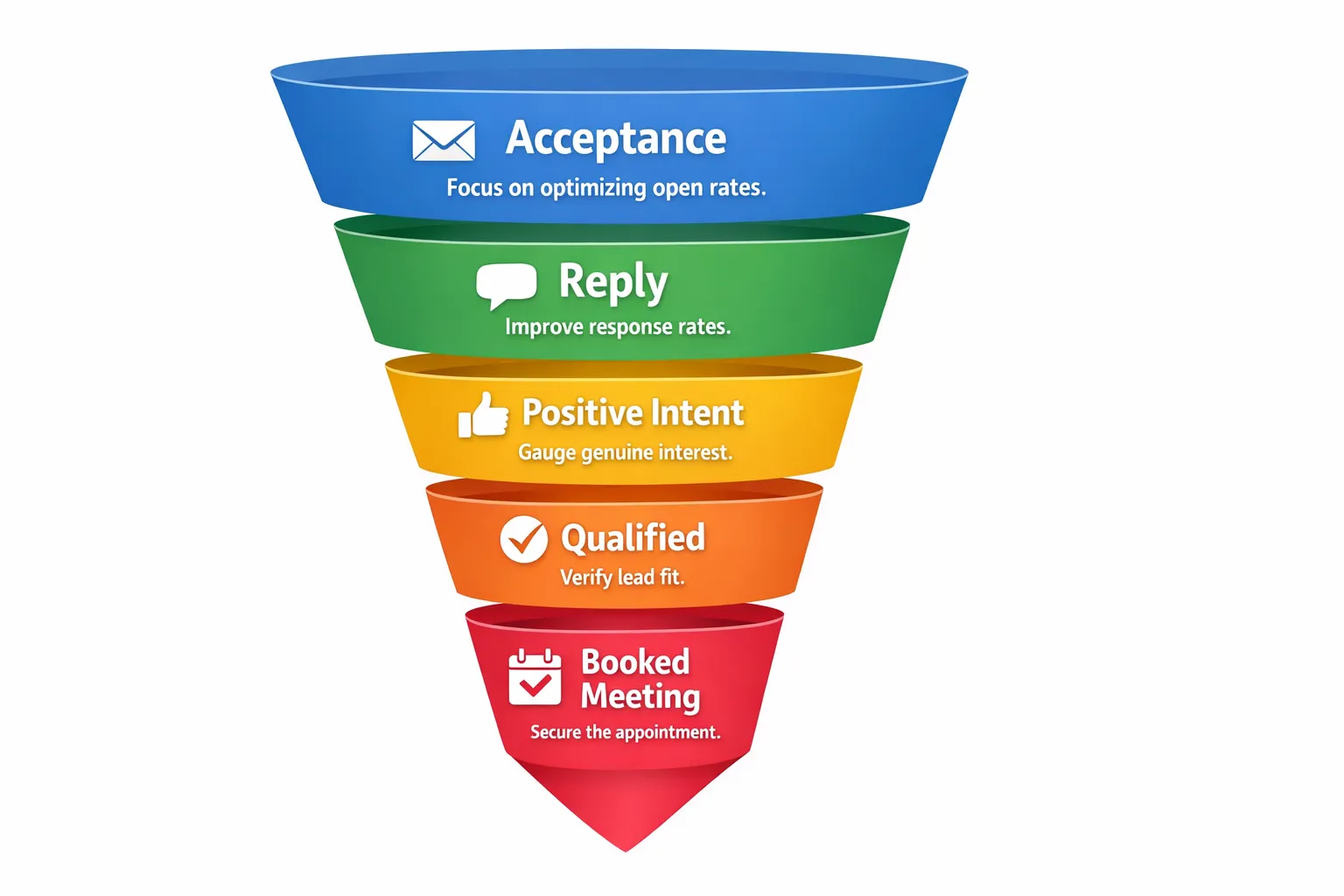
What to measure, and in what order
- Acceptance rate: Are we getting into inboxes with the right ICP and trigger?
- Reply rate: Does the opener earn a response?
- Positive intent rate: Are responses moving toward a business problem we solve?
- Qualified conversation rate: Did we confirm fit in the thread?
- Booked meeting rate and show rate: Is the scheduling flow smooth?
- Safety signals: Opt-outs, negative sentiment, and any platform warning indicators.
Optimize one stage at a time. If acceptance is low, fix targeting and invites before rewriting follow ups. If replies are high but meetings are low, work on in-thread qualification and scheduling.
Frequently Asked Questions
Will AI damage our brand voice on LinkedIn? Not if you add guardrails. Use short, honest language, keep value promises small, and let humans override live threads when stakes are high. Kakiyo supports conversation overrides, templates, scoring, and A/B testing so you can keep tone consistent.
Does AI for sales prospecting work better on LinkedIn or email? They complement each other. LinkedIn shines when your value is easier to convey in a short back and forth with visible profile context. Email is great for multi-stakeholder follow up and longer explanations. Start where your reply rates are already higher, then coordinate messages. For email tactics, see our Cold Email Outreach Strategy.
How much personalization is enough? Reference one timely trigger and one line about why that matters for the prospect. Over personalization can feel intrusive. Keep it relevant and light.
What should I A/B test first? Test the first sentence of your opener, then the CTA. Do not change more than one variable at a time and run enough volume to get a directional read before declaring a winner.
How do we prevent spam or platform risk? Pace invites and messages, honor opt-outs, and avoid aggressive follow ups. Our guide on safe automation outlines practical guardrails.
Put these tactics to work with Kakiyo
Kakiyo was built to manage personalized LinkedIn conversations end to end, from first touch to qualification to booking. With autonomous conversations, AI-driven lead qualification, customizable prompts, A/B testing, industry templates, intelligent scoring, conversation override, and a real-time analytics dashboard, your team can run the tactics above at scale while staying in control.
If you want to see this in action, start a focused 14 day lab with a narrow ICP and a single trigger. We will help you stand up the prompts, scoring, and analytics so you can prove lift fast. Learn more at Kakiyo.