
 Ilan Asseo
Open AI Chat for SDRs: Smarter LinkedIn Outreach
How SDRs can use Open AI chat models to personalize LinkedIn outreach at scale, qualify leads, and book more meetings with guardrails.

Prospects have never been harder to reach on LinkedIn. Connection requests overflow, automation “spray-and-pray” has dulled inboxes, and buyers are quick to ghost generic messages. For modern Sales Development Representatives (SDRs), the edge now comes from harnessing open AI chat systems—large-language-model (LLM) engines that can read, reason, and respond like a human while operating at machine speed.
Industry evidence: “As customers increasingly learn and buy digitally, sales reps become just one of many possible sales channels.” — Cristina Gomez, Managing Vice President, Gartner.
Source: Gartner
The LinkedIn Outreach Challenge in 2025
LinkedIn remains the B2B gold mine— 89 percent of B2B marketers use the platform for lead generation according to LinkedIn’s own 2024 Benchmark Report. Yet response rates on cold messages hover under 10 percent, and connection limits continue to tighten. Manual personalization is too slow, while first-generation automation tools lack real conversation intelligence.
What Makes Open AI Chat Different?
Open AI chat (think ChatGPT-style models or GPT-4-class APIs) goes beyond templates. It can:
- Interpret profile data and recent posts to infer buying signals.
- Generate adaptive messaging in real time, mirroring a prospect’s tone.
- Ask context-aware follow-up questions that qualify intent.
- Remember conversation history across threads, keeping every interaction coherent.
The result is outreach that feels handcrafted—yet scales across hundreds of prospects simultaneously.
Traditional Automation vs. Open AI Chat
| Capability | Legacy Sequencers | Open AI Chat Engines |
|---|---|---|
| Personalization depth | First-name and company merge tags | Narrative personalization based on role, tech stack, news |
| Conversational flow | Linear, pre-scheduled messages | Dynamic, two-way dialogue that pivots on replies |
| Qualification | Manual questions added at end of cadence | AI probes injected naturally mid-conversation |
| Scalability | High, but at the cost of relevance | High and hyper-relevant |
Five Practical Use Cases for SDRs
- Profile-Driven Icebreakers
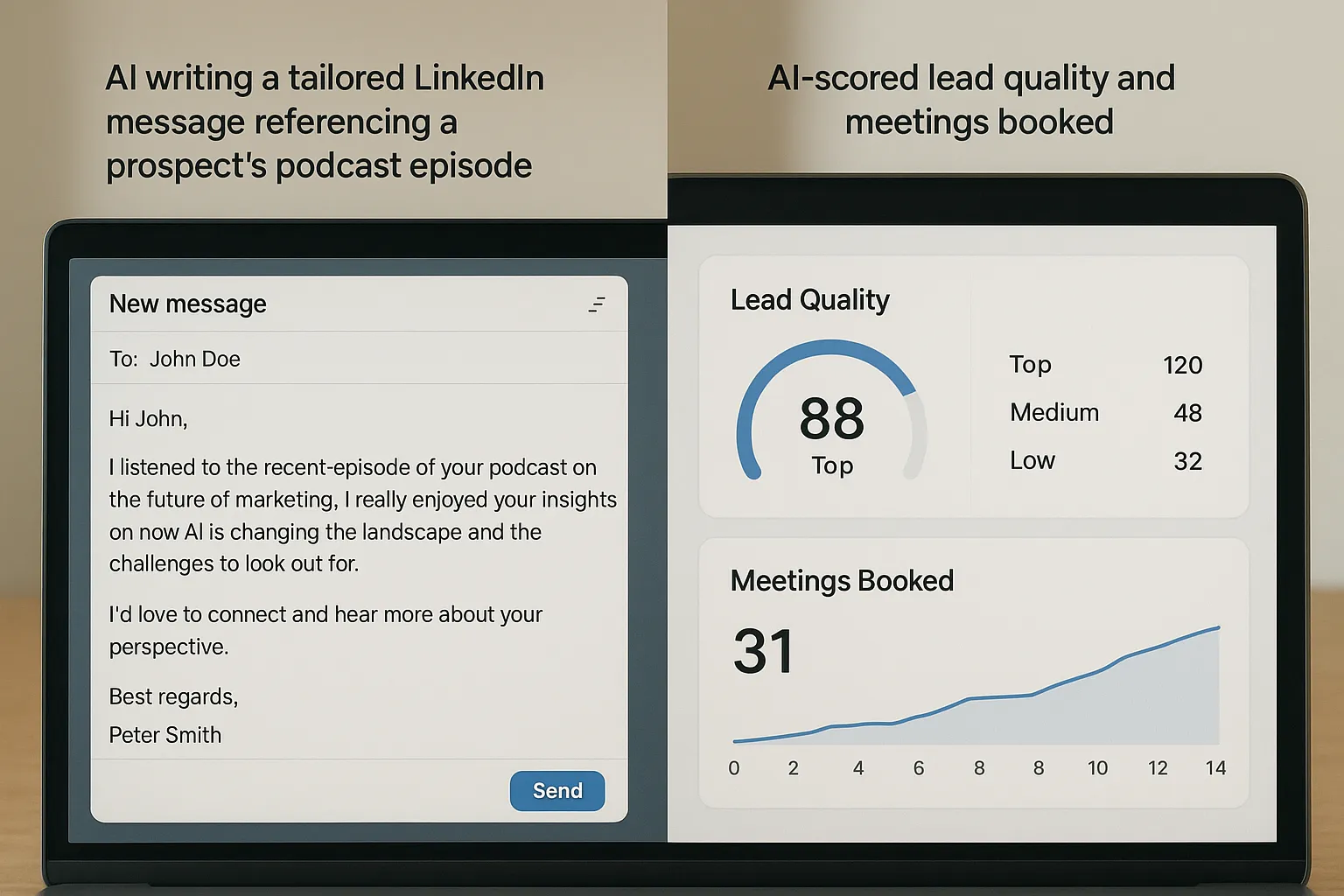
Paste a prospect’s “About” section into an AI chat and ask: “Draft a 280-character hook that references their recent webinar appearance.” - Intent Signal Summaries
Feed liked posts or newsletter comments to the model. It will surface pain points to address in your outreach. - Objection Handling on the Fly
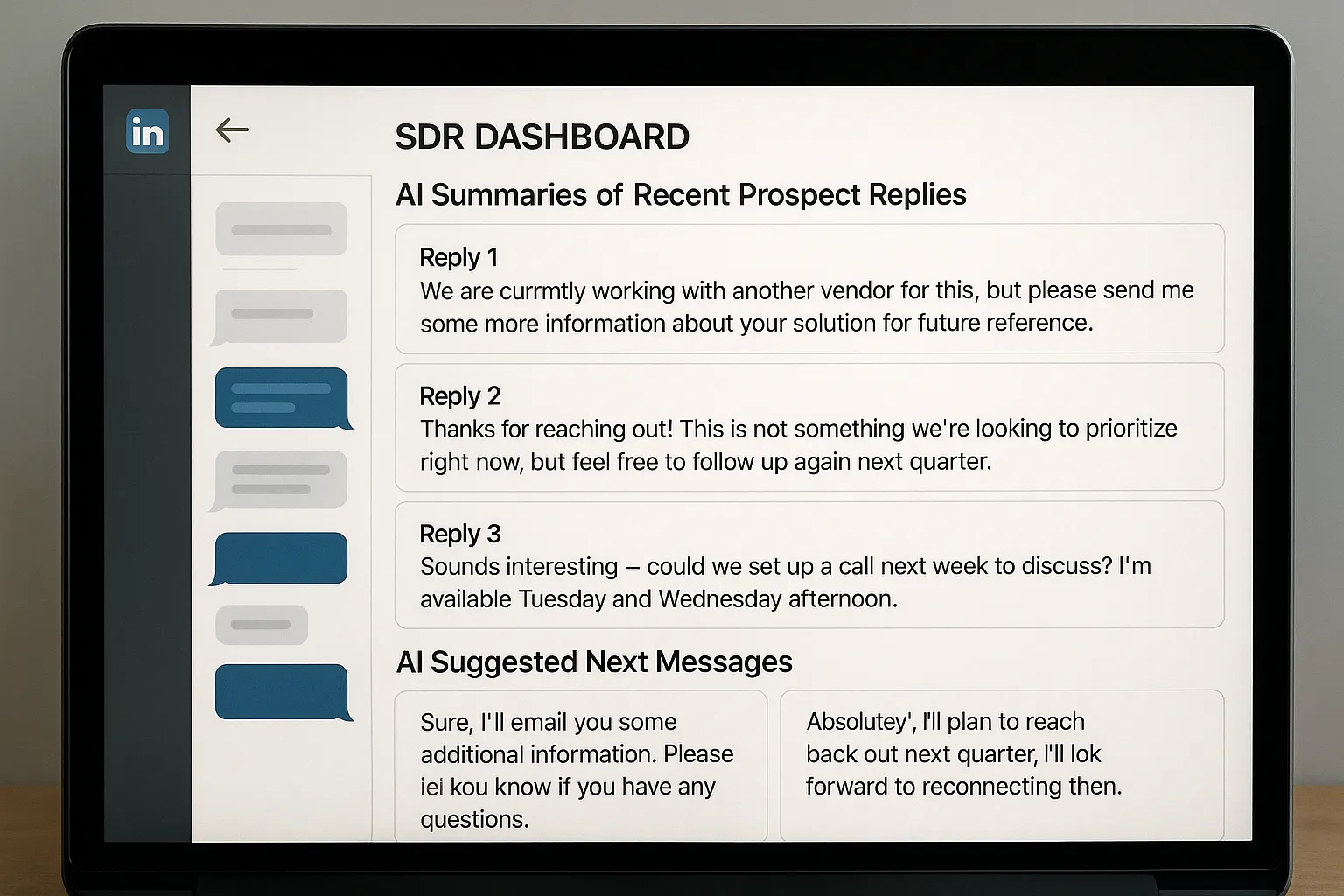
When a prospect replies “We already have a vendor,” forward the thread to the AI. It can suggest three consultative follow-ups rooted in value, not discounting. - Meeting Qualification
Ask the model to classify answers to discovery questions as Fit, Maybe, or Disqualify based on your ICP criteria. - Post-Demo Nurture
Provide the AI with call notes; it drafts a personalized recap email plus a LinkedIn post your AE can publish to reinforce value.
Building a Smarter LinkedIn Playbook With AI Chat
- Define your ICP attributes in plain language (industry, annual revenue, tech stack).
- Create a prompt library. Each prompt should state context, goal, and tone.
- Layer guardrails: length limits, compliance checks, brand voice guidelines.
- Run A/B prompt testing for the first 100 prospects; keep a spreadsheet of response metrics.
- Automate only after winning prompts consistently beat manual control groups.
- Maintain conversation override: SDRs must be able to jump in when deals heat up.
Measurement Matters
| Metric | Why It Matters | AI Optimization Angle |
|---|---|---|
| Connection acceptance rate | Gauges first-touch relevance | Refine opening hook prompt |
| Response time (prospect) | Signals engagement | Use shorter, curiosity-driven follow-ups |
| Qualification rate | Direct proxy for pipeline quality | Adjust AI probing questions |
| Meetings booked per 100 connections | North-star outcome | Tune scoring thresholds & routing |
When Point Tools Aren’t Enough
Running open AI chat in a vacuum can become a tangle of prompt docs, API keys, and browser extensions. That’s where purpose-built platforms enter—combining LLM power with sales-grade controls.
How Kakiyo Elevates AI Chat for SDR Teams
Kakiyo’s platform (https://www.kakiyo.com) embeds GPT-4-class models inside a workflow engineered for LinkedIn prospecting:
- Autonomous conversations: The AI manages multi-thread chats from hello to hand-off, respecting daily connection limits.
- Live qualification & scoring: Custom rules tag buyer intent and push hot leads to your CRM automatically.
- A/B prompt testing: Run controlled experiments inside Kakiyo; the dashboard surfaces statistically significant winners.
- Industry templates: Financial services jargon one day, cybersecurity the next—select a template instead of reinventing prompts.
- Conversation override: SDRs can jump into any thread instantly, ensuring no AI misstep jeopardizes a deal.
- Advanced analytics: Track conversion funnels and message-level engagement to continuously optimize.
Getting Started Today
- Audit your current LinkedIn cadence metrics. Where do prospects drop off?
- Draft three core prompts: connection request, first follow-up, discovery question.
- Pilot an open AI chat model on 50 prospects—measure accept, reply, and qualify rates.
- Compare against your baseline. If AI wins, scale with a platform like Kakiyo that adds governance and insight.
The Bottom Line
Open AI chat transforms LinkedIn outreach from mechanical blasts into intellectually engaging dialogues that buyers welcome. For SDRs pressured to create pipeline in leaner markets, the ability to personalize at scale is no longer optional—it’s the new standard. Leveraging a purpose-built solution such as Kakiyo lets teams deploy that standard safely, measure it rigorously, and, most importantly, book more meetings.
Ready to see it in action? Explore how Kakiyo automates LinkedIn conversations without losing the human touch at https://www.kakiyo.com.
FAQ
What makes a LinkedIn or cold outreach sequence effective?
An effective outbound sequence matches the buyer's context, uses short messages, and measures reply quality rather than raw volume. Cadence, targeting, and stop rules matter as much as copy.
How many touches should I use before stopping?
Most teams should stop once intent is clearly absent or once the sequence becomes repetitive. The right stop rule protects deliverability, reply quality, and brand perception.
Should I automate all outreach?
No. Automation should remove repetitive work, not replace judgment. The best systems automate targeting, timing, and admin while keeping messaging and qualification grounded in context.
How do I know whether outreach is working?
Track positive reply rate, meeting quality, and downstream conversion instead of open rates alone. If meetings do not progress, the issue is usually targeting or qualification, not activity volume.