
 Ilan Asseo
Best AI Sales Tools for SDR Teams in 2025
If you lead or work on an SDR team in 2025, this guide highlights the best AI sales tools by job to be done, how to compare them, and how to pilot a lean.

If you lead or work on an SDR team in 2025, the fastest path to pipeline is a smart mix of AI that handles research, personalization, outreach, qualification, and meeting booking while giving managers full control and visibility. This guide cuts through noise to highlight the best AI sales tools by job to be done, how to compare them, and how to pilot a lean, revenue-focused stack.

Industry evidence: Salesforce Research reports that sales reps spend only 28% of their week actually selling, with the rest consumed by deal management, data entry, and other non-selling work.
Source: Salesforce State of Sales
What “best” means for SDR teams in 2025
The right AI sales tools should do three things exceptionally well:
- Reduce manual work without sacrificing brand safety and compliance
- Improve conversion at each micro-step, from acceptance rate to booked meeting
- Prove impact with trustworthy analytics that tie activity to pipeline
In practice, look for systems that personalize at scale, qualify in-thread, support A/B testing and prompt governance, allow human override, and feed clean activity data back to your CRM. The goal is fewer tabs, faster learning cycles, and more qualified meetings per rep.
Editor’s picks: Best AI sales tools for SDR teams in 2025
Below are category leaders SDR teams rely on today. We list them by the job they solve, why SDRs pick them, and what to verify during evaluation.
Kakiyo, best for autonomous LinkedIn conversations and meeting booking
Kakiyo manages personalized LinkedIn conversations end to end, from first touch to in-thread qualification to booking. SDRs use it to scale handcrafted-feeling outreach while keeping control.
- Best for teams doubling down on LinkedIn as a primary channel
- Why SDRs pick it, autonomous conversations, AI-driven lead qualification, conversation override control, centralized dashboard, A/B prompt testing, industry-specific templates, intelligent scoring, and simultaneous conversation management
- What to verify, brand guardrails, analytics depth, prompt governance, and how quickly you can iterate with real prospects
To see how a LinkedIn-first motion fits into your process, skim our playbooks: AI SDR, automate conversations, qualify faster, book more and LinkedIn prospecting from first touch to demo.
Apollo, best for prospecting data and AI-assisted sequencing
Apollo combines B2B data, email outreach, and light AI assistance. SDRs use it for list building, enrichment, and launching email sequences.
- Why SDRs pick it, broad data coverage and a single workspace for research plus outreach
- What to verify, data accuracy for your ICP, deliverability posture, and how AI helps personalize at scale without hallucinations
ZoomInfo, best for enrichment and go-to-market data backbone
ZoomInfo is a data and intelligence layer many SDR ops teams standardize on for coverage and firmographic consistency.
- Why SDRs pick it, enrichment that improves routing and prioritization across channels
- What to verify, compliance posture for your regions and how updated the contacts are for your vertical
6sense, best for account intent and prioritization
6sense surfaces buying signals to help SDRs focus on accounts more likely to convert.
- Why SDRs pick it, intent-driven prioritization so reps spend time where timing is right
- What to verify, match rates to your target list, signal freshness, and downstream reporting to pipeline
Outreach, best for sales engagement with AI assist
Outreach is a mature sales engagement platform used to orchestrate sequences, capture activity, and coach reps with AI assistance.
- Why SDRs pick it, reliable sequencing at scale with reporting managers trust
- What to verify, governance over AI-generated content and clean CRM sync
Salesloft, best for multi-channel cadences and manager visibility
Salesloft is another top platform for email, calls, and social touches in a unified cadence with AI assist.
- Why SDRs pick it, robust team workflows and analytics that connect activity to outcomes
- What to verify, ease of testing message variants and channel mix for your ICP
Gong, best for conversation intelligence and coaching
Gong analyzes calls and meetings, turning conversations into insights, deal risks, and coaching opportunities.
- Why SDRs pick it, faster ramp and sharper messaging based on what buyers actually say
- What to verify, permissions, redaction, and compliance for recorded calls
Calendly, best for frictionless scheduling and routing
Calendly reduces no-shows and back-and-forth by letting prospects book instantly, with routing and qualification options.
- Why SDRs pick it, speed to meeting and conversion lift from instant scheduling
- What to verify, round-robin fairness and handoff quality into your calendar and CRM
Lavender, best for email coaching and on-the-fly personalization
Lavender coaches reps to write clearer, faster, and more relevant cold emails with AI-driven suggestions.
- Why SDRs pick it, higher reply rates through better writing quality and relevance
- What to verify, brand voice guardrails and the balance between speed and originality
HubSpot Sales Hub, best for an all-in-one with native AI
HubSpot Sales Hub is popular with teams that want CRM, engagement, and AI assist in one place.
- Why SDRs pick it, simple admin, native AI features, and a unified data model
- What to verify, fit for enterprise workflows versus the simplicity that makes it shine
Tool-to-job map
Use this to pick a lean stack that covers the core SDR workflow without redundancy.
| Job to be done | Primary category | Example picks |
|---|---|---|
| Build lists and enrich | Data and enrichment | ZoomInfo, Apollo |
| Prioritize who to contact now | Intent and scoring | 6sense |
| Run cadences across channels | Sales engagement | Outreach, Salesloft |
| Personalize LinkedIn and qualify in-thread | LinkedIn autonomous conversations | Kakiyo |
| Improve emails and messaging quality | Writing and coaching AI | Lavender |
| Convert interest to meetings | Scheduling and routing | Calendly |
| Improve talk tracks and ramp | Conversation intelligence | Gong |
| CRM with AI assist | All-in-one | HubSpot Sales Hub |
Evaluation checklist and scoring rubric
Here is a practical framework you can use in a vendor evaluation. Score each item from 1 to 5, then multiply by weight for a total out of 100.
| Criterion | Weight | Why it matters | What good looks like |
|---|---|---|---|
| Precision and personalization quality | 20 | Reduces manual edits and boosts conversion | Messages that feel human, context-aware, and on-brand |
| Governance and guardrails | 15 | Prevents off-brand or non-compliant messaging | Prompt libraries, approval workflows, conversation override |
| Testing velocity | 10 | Lets you learn fast and improve copy | Built-in A/B prompt testing with clear winners |
| Analytics and attribution | 15 | Proves impact to leadership | Dashboards for acceptance, response, qualified conversation, meetings |
| Integration and data hygiene | 10 | Keeps CRM accurate and workflows smooth | Reliable sync without duplicates |
| Security and compliance | 10 | Protects customer data and brand | Role-based access, SOC 2 or similar standards |
| Ease of use and rollout time | 10 | Reduces ramp time for SDRs | Intuitive UI and clear onboarding |
| Cost versus outcome | 10 | Ensures ROI and scalability | Pricing aligned to deal economics |
A simple ROI model you can share with finance
You do not need a PhD to justify AI spend. Start with a before and after view of your conversion funnel and time saved.
- Time savings, estimate minutes saved per prospect across research, writing, and scheduling. Multiply by weekly prospect volume and SDR fully loaded hourly rate to get labor dollars reclaimed.
- Conversion lift, compare baseline acceptance, reply, qualified conversation, and meeting rates versus a 4 to 8 week pilot. Even small lifts compound across the funnel.
- Pipeline impact, pipeline equals number of meetings times opportunity creation rate times average deal size. If AI raises qualified meetings or improves connect-to-opportunity rate, you will see pipeline gains.
- Payback, payback period equals software and enablement cost divided by incremental gross profit from added deals.
Finance partners respond well when you show both reclaimed hours and incremental revenue, not just activity metrics.
30, 60, 90 day rollout plan
Day 1 to 30, instrument and pilot
- Define your ICP, triggers, and measurable goals such as qualified conversation rate and meetings booked.
- Pick one high-impact channel to pilot, for example, LinkedIn or email. Restrict scope to two ICP slices and two value hypotheses.
- Draft prompts and messages with clear brand guardrails and compliance language.
- Turn on measurement for acceptance, response, qualified conversation, and meeting booked. Create a baseline for comparison.
Day 31 to 60, expand and govern
- Introduce A B testing to compare prompts and opening lines.
- Layer in prioritization from intent data so reps start with high-probability accounts.
- Set rules for human conversation override and clear escalation to AEs.
- Publish a weekly learning loop summary, what worked, what did not, and what to change next week.
Day 61 to 90, scale and attribute
- Roll successful prompts to all reps. Create playbooks for exceptions and objection handling.
- Feed clean activity and outcomes into CRM dashboards. Attribute meetings to specific prompts and channels.
- Partner with finance on the ROI model using your real data. Decide what to expand or cut.
Compliance, brand safety, and human-in-the-loop
- Use prompt guardrails that constrain claims and keep messaging compliant with your industry norms.
- Require conversation override for sensitive segments or late-stage prospects.
- Centralize analytics so managers can spot off-brand responses quickly and fix them.
- Document opt-out handling and escalation rules for every channel.
These basics keep scale from turning into risk.
Where Kakiyo fits in a modern SDR stack
If LinkedIn is one of your top-performing channels, Kakiyo functions as the AI that keeps it moving, personalized, and measurable. Teams use it to:
- Run autonomous yet brand-safe LinkedIn conversations at scale
- Qualify prospects within the thread, then book meetings
- A B test prompts and templates by ICP and trigger
- Score and prioritize conversations, then hand off to humans when it matters
- Monitor everything in a centralized real-time dashboard with analytics and reporting
You can explore a channel-first approach here, AI SDR, automate conversations, qualify faster, book more, then pair it with your existing data, intent, and engagement tools.
Putting it all together
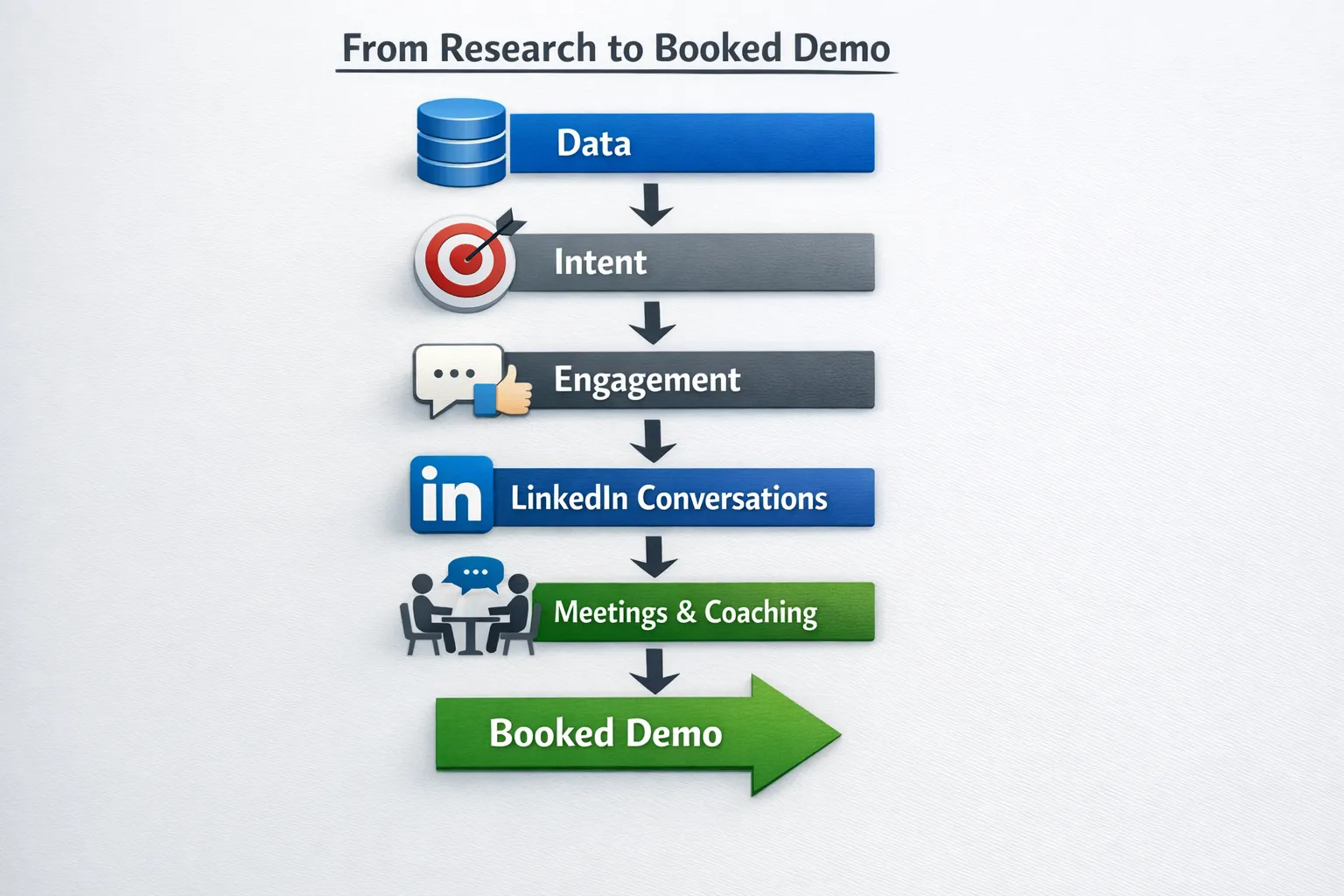
A practical 2025 SDR stack often looks like this:
- Data and enrichment, ZoomInfo or Apollo
- Intent and prioritization, 6sense
- Sales engagement, Outreach or Salesloft
- LinkedIn autonomous conversations, Kakiyo
- Meeting scheduling and routing, Calendly
- Conversation intelligence, Gong
- CRM with AI assist, HubSpot Sales Hub
- Writing coach for email, Lavender
Start small, prove lift on one channel, then add the next building block. The point is not more software, it is more qualified meetings with less manual work and better governance.
When you are ready to make LinkedIn your highest converting lane, try Kakiyo for end to end conversations that qualify and book while SDRs focus on high value opportunities. Learn more at Kakiyo.
FAQ
Where does AI actually help in sales?
AI helps most when it reduces repetitive work, surfaces better signals, and improves execution speed. It is strongest in research, qualification support, follow-up, and workflow automation.
What are the limits of AI in sales?
AI still depends on clean inputs, good process design, and human oversight. It can accelerate bad workflows just as easily as good ones.
How should teams evaluate AI sales tools?
Evaluate tools by workflow fit, data quality, implementation friction, and measurable business outcomes. A feature-rich tool is not automatically the right tool for your motion.
Does AI replace SDRs or sales reps?
Usually no. In most teams, AI reshapes the role by taking over repetitive execution while humans stay responsible for judgment, positioning, and relationship depth.