
 Ilan Asseo
Sales AI Tools vs Legacy Sequencers
Modern outbound teams are hitting a ceiling with step-based legacy sequencers. This post contrasts legacy sequencers with conversation-led sales AI tools.

Outbound teams relying on legacy sequencers hit a ceiling when prospects expect real conversations, not timed steps. This post compares sales AI tools and legacy sequencers so you can decide which model fits your motion.
Modern outbound teams are hitting a ceiling with legacy sequencers.
Not because sequencers are “bad” software, but because the model they’re built on is fundamentally step-based: schedule touchpoints, create tasks, and hope the rep does the right thing when a prospect replies. In 2026, that approach increasingly clashes with how buyers behave on channels like LinkedIn, where the conversation itself is the work (context, trust, qualification, next steps).
This is where sales AI tools are changing the game. Instead of automating steps, they automate and optimize the conversation loop, from first touch to qualification to meeting booking.
Below is a practical, decision-oriented comparison: Sales AI tools vs legacy sequencers, what each is best at, where each breaks down, and how to adopt AI without losing control.
Industry evidence: “Our research suggests that a fifth of current sales-team functions could be automated.” — McKinsey & Company.
Source: McKinsey
What “legacy sequencer” really means (and why it still exists)
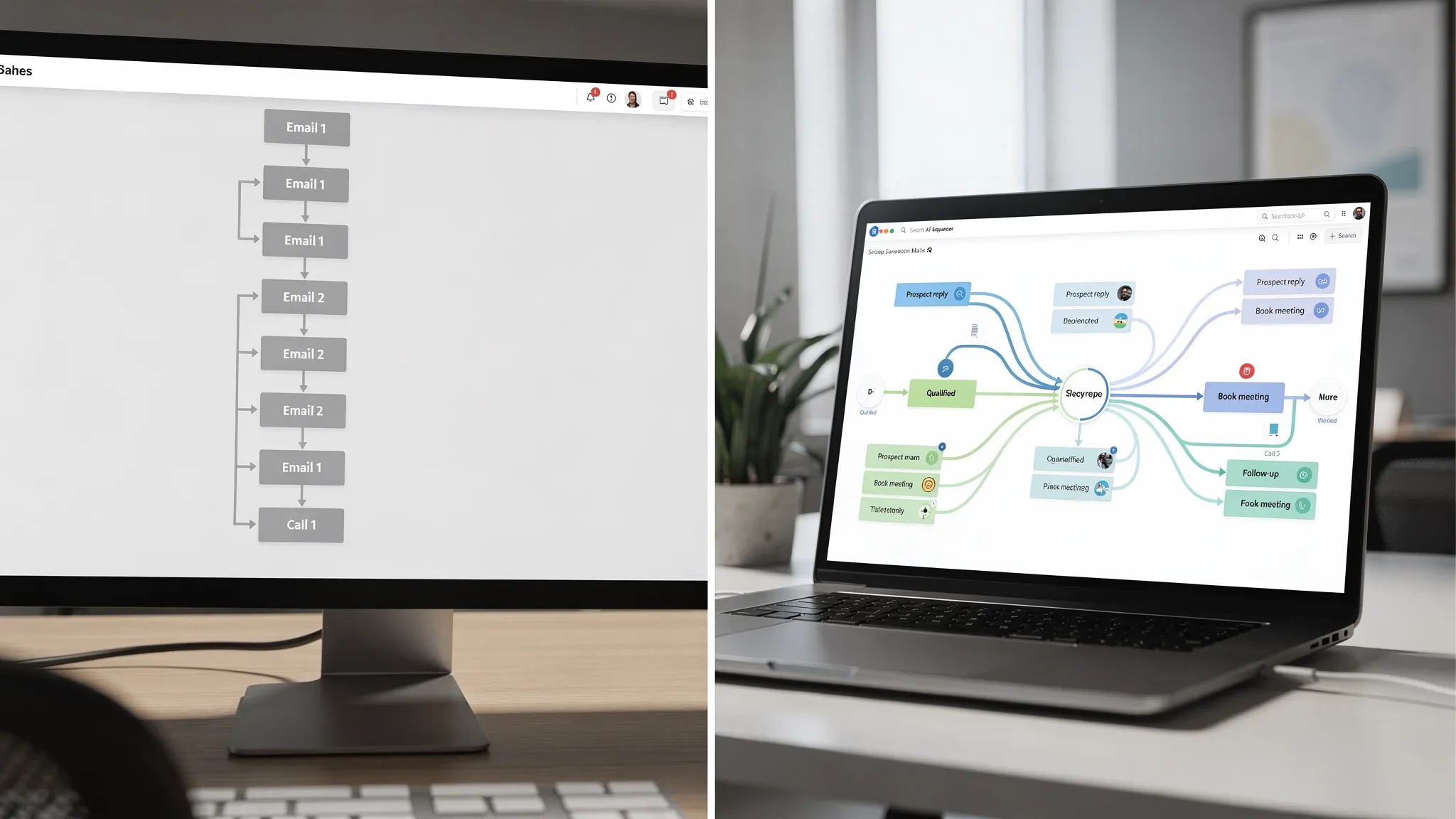
A legacy sequencer (sometimes called a sales engagement platform) is designed to execute a predefined cadence across channels like email, phone, and sometimes LinkedIn. The core value proposition is consistency and activity management.
In practice, sequencers excel at:
- Turning a playbook into repeatable tasks (send email, call, follow up)
- Standardizing messaging across a team
- Reporting on cadence-level activity (steps completed, replies, meetings)
- Making outbound easier to manage at scale
This model is still useful because much of outbound is operational by nature, especially in email and phone motions where the “unit of work” is a step.
The problem is that buyers do not respond in steps.
Once a prospect replies, a sequencer typically hands control back to the rep. That handoff is where outcomes diverge: some reps qualify well, some rush to a meeting, some stall, some go off-brand. The sequencer created activity, but it did not manage the conversation quality.
What “sales AI tools” mean in 2026 (beyond AI copywriting)
“Sales AI tools” is a broad label. For this comparison, the meaningful category is tools that:
- Use AI to generate and adapt messages based on context
- Maintain conversation state (what’s been asked, what was answered, what’s still unknown)
- Drive toward outcomes like qualification evidence and booked meetings
- Learn from results via experimentation and analytics
This is different from “AI that helps reps write messages.” Writing assistance is helpful, but it still leaves the rep doing the orchestration.
A more advanced model is conversational automation, especially on LinkedIn, where the platform behavior is inherently conversational and relationship-driven.
Kakiyo fits in this category: it autonomously manages personalized LinkedIn conversations at scale, qualifies prospects, and books meetings, with controls like customizable prompts, A/B prompt testing, intelligent scoring, analytics, and conversation override.
The core difference: step automation vs conversation automation
Legacy sequencers optimize cadence execution. Sales AI tools optimize conversation outcomes.
That sounds subtle, but it changes everything: what you measure, what you standardize, and what “scale” actually means.
Here’s a clear comparison.
| Capability | Legacy sequencers | Sales AI tools (conversation-led) |
|---|---|---|
| Primary unit of work | Steps (touch 1, touch 2, call task) | Conversation state (context, intent, evidence, next best action) |
| Personalization | Usually template-first, manual tokens, light dynamic fields | Context-driven generation, adaptive follow-ups, deeper relevance |
| Handling replies | Rep-driven, tool tracks status | AI-managed routing, summarization, qualification flow, escalation |
| Qualification | Mostly manual or form-based | In-thread qualification, scoring, evidence capture |
| Experimentation | A/B testing templates and subject lines (varies by tool) | Prompt testing, intent scoring calibration, conversation path testing |
| Reporting | Activity and cadence metrics | Micro-conversions (accept, reply, qualified conversation, meeting booked) plus quality signals |
| Best channels | Email, phone, task-based workflows | Conversational channels (LinkedIn), inbound chat, messaging-first motions |
| Main risk | Activity looks good, pipeline quality does not | Brand safety and governance if guardrails are weak |
Why legacy sequencers break down on LinkedIn
Sequencers can include LinkedIn steps, but LinkedIn is not an “execute steps” channel. It is a context and trust channel.
Three practical breakdowns show up quickly:
1) Personalization does not scale manually
LinkedIn prospects expect relevance. A generic pitch that might still work in email often fails in DMs because it feels closer to a real relationship.
Sequencers typically push reps toward templated touches with shallow personalization, because deep personalization is time-expensive.
2) The work is in the thread, not the touch
On LinkedIn, the most important moment is the reply.
- What question do you ask next?
- How do you qualify without interrogating?
- How do you handle objections without escalating too early?
- When is it appropriate to suggest a meeting?
Sequencers do not “run” this part. They log it.
3) Measurement incentives drift toward volume
Sequencer reporting often emphasizes step completion and reply rates. Those are useful, but they can hide the real issue: are replies turning into qualified conversations and held meetings?
A conversation-led motion needs conversation-stage metrics (for example, qualified conversation rate) to prevent activity gaming.
If you want a deeper metric model for LinkedIn-first SDR teams, Kakiyo’s guide to SDR KPIs that matter maps the funnel from first touch to AE-accepted outcomes.
Where sales AI tools win (and where they should not replace sequencers)
Sales AI tools tend to win when the bottleneck is human attention per active conversation.
If your team has any of these symptoms, AI is usually a better lever than adding more sequences:
- Reps cannot keep up with replies, so leads go cold in-thread
- Qualification is inconsistent across reps
- Meetings are booked, but quality is low (AE rejects, no-shows, no next step)
- Personalization quality drops as volume increases
- Your team wants to run more experiments, but manual execution makes testing slow
That said, sequencers still have a role.
The “and” strategy is common
Many high-performing teams keep sequencers for:
- Email and call orchestration
- Task management and rep workflows
- Simple, deterministic follow-up logic
Then they add AI for:
- LinkedIn conversation management
- In-thread qualification and scoring
- Booking workflows and routing
This reduces the biggest cost in outbound: attention fragmentation.
A buyer’s evaluation checklist (what to ask before switching)
If you are evaluating sales AI tools against legacy sequencers, the wrong question is “which sends more messages?”
A better question is: which system produces more qualified conversations per hour of human time, without increasing brand or compliance risk?
Here is a practical scorecard you can use in demos and pilots.
| Evaluation area | What “good” looks like | Why it matters |
|---|---|---|
| Conversation autonomy | Tool can run multi-turn threads, not just first messages | Most value is after the first reply |
| Qualification design | Clear qualification framework, evidence capture, scoring thresholds | Prevents low-quality meetings |
| Human override | Easy to intervene, approve, edit, or take over a thread | Required for brand safety and edge cases |
| Experimentation | A/B prompt testing, clear attribution to outcomes | Lets you improve systematically, not by opinion |
| Analytics | Micro-conversions and quality metrics, not only activity | Aligns the team on outcomes |
| Channel fit | Native strength on the channel you care about (LinkedIn is different from email) | Avoids “checkbox channels” |
| Governance | Permissions, audit trails, policy controls, safe rollout modes | Reduces organizational and account risk |
Kakiyo’s product positioning aligns closely with this checklist: autonomous LinkedIn conversations, AI-driven qualification, A/B prompt testing, scoring, override controls, and centralized analytics.
The biggest operational shift: from “cadences” to “micro-conversions”
Legacy sequencers push you toward managing:
- Steps completed
- Touches per day
- Reply rate
Sales AI tools, when used well, push you toward managing:
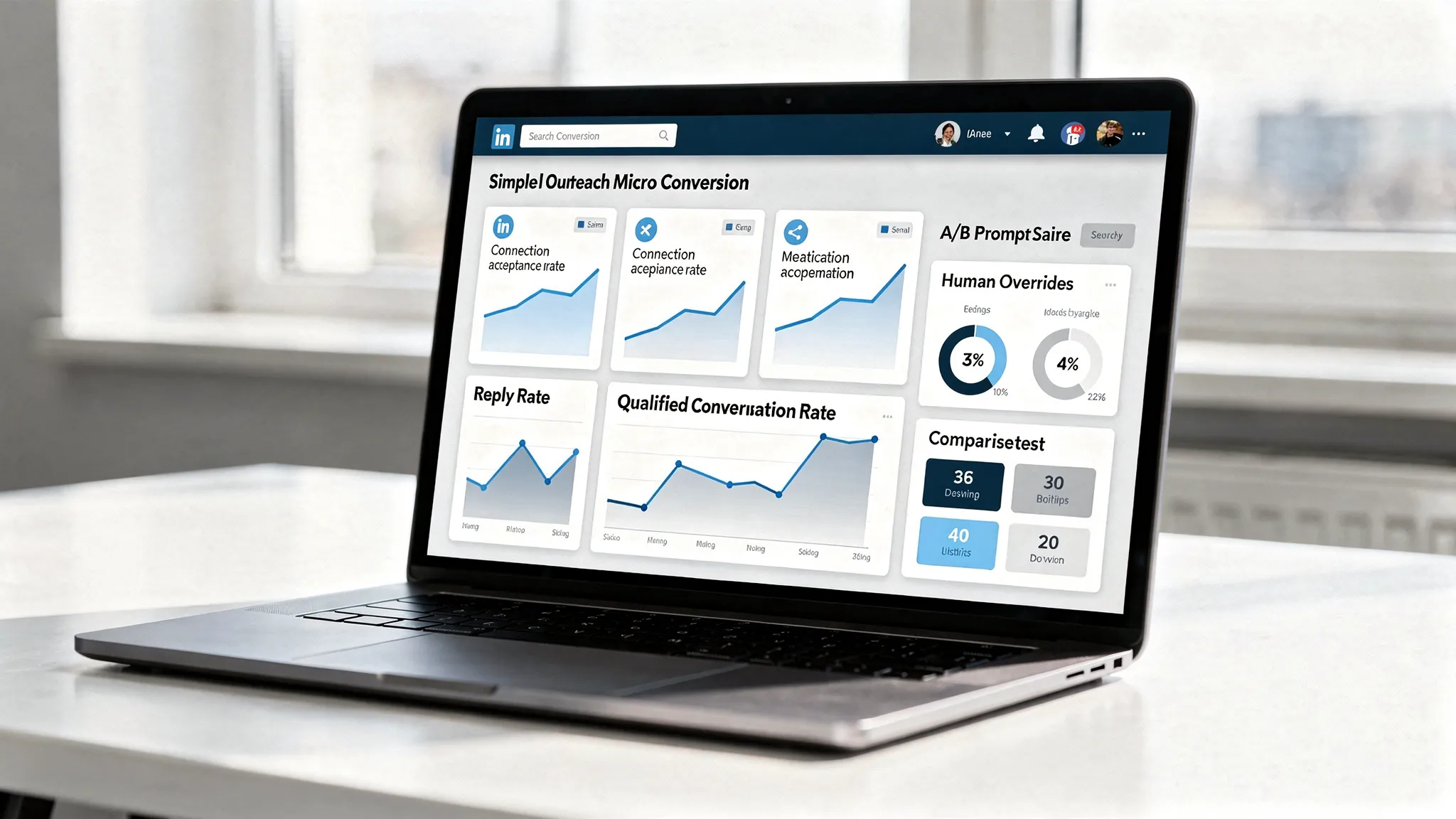
- Connection acceptance rate
- Reply rate
- Positive reply rate
- Qualified conversation rate
- Meetings booked and held
- AE acceptance and meeting-to-opportunity conversion
This is not just reporting. It changes coaching.
Instead of coaching “do more follow-ups,” you coach “ask one thread-safe qualification question before suggesting a meeting.”
If you want a concrete model for turning conversations into qualification evidence, Kakiyo’s lead qualification process guide is a strong foundation.
Common failure modes when teams replace sequencers with AI (and how to avoid them)
Sales AI tools can fail, not because the AI “doesn’t work,” but because the rollout ignores operational reality.
Over-automation too early
If you go from fully manual to fully autonomous overnight, you create risk:
- Messaging that is technically personalized but strategically wrong
- Qualification that is inconsistent with your ICP
- Brand voice drift
A safer approach is staged autonomy with tight review loops.
Measuring the wrong outcomes
If you only measure reply rate, you will optimize for curiosity, not pipeline.
In LinkedIn outreach especially, it is easy to get replies that do not convert. Aim measurement at qualified conversations and held meetings.
No escalation rules
AI should not handle everything. You need explicit “handoff moments,” such as:
- When the prospect asks for pricing
- When procurement, security, or integration questions appear
- When intent is high and timing is near-term
Kakiyo’s conversation override control is designed for this reality: humans stay in the loop when it matters.
For a safety-first approach to scaling LinkedIn automation, see automated LinkedIn outreach: do it safely and effectively.
A practical pilot plan: prove lift without ripping out your sequencer
Most teams do not need a dramatic “replacement” project. A better path is a controlled pilot where AI takes ownership of a specific motion and you compare outcomes.
Choose one narrow motion
Examples that work well:
- A single ICP segment (for example, RevOps leaders at mid-market SaaS)
- A trigger-based outreach motion (new role change, funding, hiring signals)
- An event-timed blitz (conference attendee follow-ups)
Kakiyo’s playbook-oriented approach is well aligned with these tests. For ideas, see AI for sales prospecting tactics that book meetings.
Define success in conversation terms
Pick a small set of metrics you can trust:
- Qualified conversation rate
- Meetings booked and held n- AE acceptance rate (or meeting-to-opportunity conversion if volume supports it)
Avoid judging early on raw activity. AI should reduce manual effort, not necessarily increase touches.
Run A/B testing where it matters
Legacy sequencers often test messages at the template level. With AI, you can test at the prompt and conversation-path level.
That means you can ask:
- Which opening context produces more qualified replies?
- Which qualification question produces less drop-off?
- Which CTA yields more held meetings?
Keep the sequencer running in parallel
During the pilot, let the sequencer keep doing what it is good at (email, call tasks) while AI runs LinkedIn threads for the test segment.
This reduces organizational resistance and isolates impact.
When a legacy sequencer is enough (be honest about it)
You might not need a sales AI tool yet if:
- Your outbound volume is low and highly targeted (founder-led, small account lists)
- Your biggest constraint is data quality, not execution
- Your motion is primarily email-based and already converts well
- You lack a stable ICP and qualification definition (AI will only scale confusion)
In those cases, fix fundamentals first: ICP clarity, qualification criteria, handoff SLAs, and clean reporting.
When sales AI tools become a competitive advantage
AI becomes a meaningful advantage when:
- LinkedIn is a primary channel for outbound or expansion
- You want to scale conversations without scaling headcount linearly
- Your team needs consistent qualification evidence before meetings are booked
- You want an experimentation engine, not just a sending engine
This is the gap Kakiyo is built to fill: managing personalized LinkedIn conversations end-to-end, qualifying prospects, and booking meetings so SDRs can focus on high-value opportunities.
Next step: evaluate Kakiyo as the “conversation layer” on LinkedIn
If your current sequencer is giving you more activity but not more qualified meetings, you likely do not have a sequencing problem. You have a conversation capacity and qualification consistency problem.
Kakiyo is designed for teams that want to run LinkedIn-first outbound at scale with:
- Autonomous LinkedIn conversations
- AI-driven lead qualification and intelligent scoring
- Custom prompts, industry templates, and A/B prompt testing
- Conversation override control for human-in-the-loop governance
- A centralized dashboard with analytics and reporting
You can explore how Kakiyo fits your motion at Kakiyo and compare it against your current stack with the pilot scorecard above.
FAQ
Where does AI actually help in sales?
AI helps most when it reduces repetitive work, surfaces better signals, and improves execution speed. It is strongest in research, qualification support, follow-up, and workflow automation.
What are the limits of AI in sales?
AI still depends on clean inputs, good process design, and human oversight. It can accelerate bad workflows just as easily as good ones.
How should teams evaluate AI sales tools?
Evaluate tools by workflow fit, data quality, implementation friction, and measurable business outcomes. A feature-rich tool is not automatically the right tool for your motion.
Does AI replace SDRs or sales reps?
Usually no. In most teams, AI reshapes the role by taking over repetitive execution while humans stay responsible for judgment, positioning, and relationship depth.